


COO, India Leaders for Social Sector and Head, Centre of Excellence for Leadership
At the end of January, we celebrated a meaningful milestone – the Silver Jubilee of The ILSS Leadership Program. Over 500 Alumni of this Program have committed themselves to a learning journey to better understand India’s social sector and explore how they can engage meaningfully within it.
As I reconnected with many of them during the celebrations, one group that I met during this period stayed with me in particular: the alumni of Cohort 8.
Cohort 8 was the first cohort of crossover leaders I worked closely with at ILSS. I remember beginning that journey with cautious optimism. These were accomplished professionals choosing to step into a sector shaped by different incentives, constraints, and measures of success. I wondered how they would navigate this shift. How would they work alongside home-grown leaders? What would leadership look like in a space where authority is rarely linear and impact unfolds slowly? After all, in the social sector, change accumulates quietly. It builds through discipline, choices, and patience.
More than five years later, it has been deeply affirming to see the pathways they have taken.
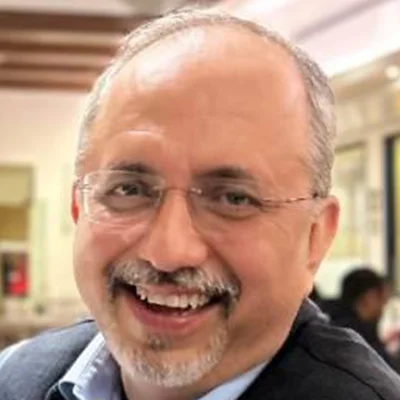
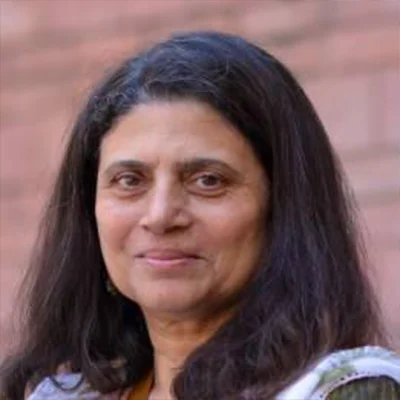
Anjali Hegde
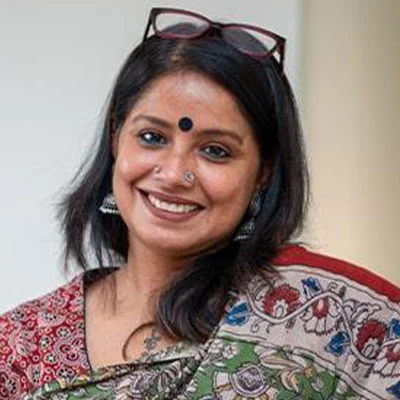
Barsha Banerjee
Leadership Begins with the Self
At The ILSS Leadership Program, we do not begin with strategy decks. We begin with self-awareness.
Before discussing governance, fundraising, public systems, or digital transformation, we invite participants to examine their motivations, assumptions, and purpose for working in the social sector. Leadership in this sector demands clarity of intent. It requires individuals to ask why they are here, what service and nation-building mean to them, and how they respond when authority is questioned or when progress is layered, complex and slow.
For many professionals transitioning into development, this inward shift is transformative. Moving from performance metrics to community outcomes requires recalibration.
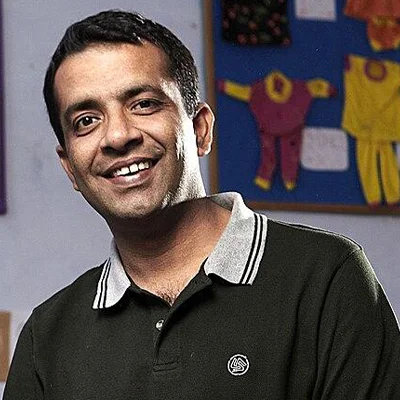
Anshu Gupta
When Anshu Gupta, Founder of Goonj, engages with our cohorts, he challenges conventional notions of charity through the lens of dignity. His leadership is rooted in proximity to communities and disciplined consistency. That indeed is leadership as practice.
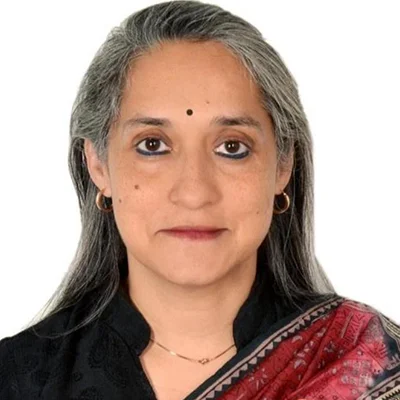
Romonika D. Sharan
Romonika D. Sharan, in her leadership role at Central Square Foundation, works at the intersection of education policy reform and state system strengthening. Building on her former experiences as a bureaucrat, her leadership illustrates how systems change is built through sustained engagement rather than episodic intervention.
Seeing the System, Not Just the Organisation
India’s social challenges are deeply interconnected. Education intersects with nutrition and gender. Climate intersects with livelihoods. Public policy shapes outcomes in ways that ripple far beyond individual programs.
This is why systems thinking is central to the Program, and is a focus from both a technical perspective led by Mihir Mathur and a multidisciplinary practice-enabling perspective from sector leaders as described below.
When economist Dr A. K. Shivakumar engages with our cohorts, he situates development across both economic and human development indices to spark conversations about growth and progress. He nudges leaders to interrogate data responsibly and understand public systems from the ground up.
Similarly, when Rukmini Banerji, CEO of Pratham, reflects on decades of improving foundational learning, she demonstrates evidence in action. ASER reshaped national discourse through research and persistent field engagement that built credibility over time.
Our alumni embody this systems lens across their roles in the sector –
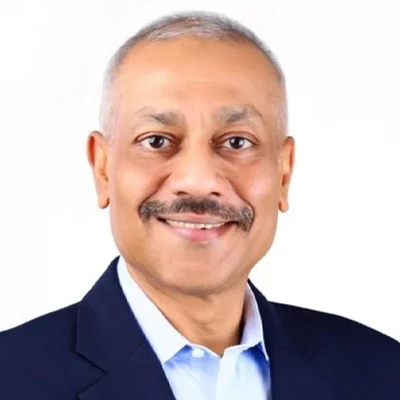
Arvind Agrawal
Arvind Agrawal in his role as Pro-Vice Chancellor at Plaksha University, is leveraging his experiences in building business across geographies in the space of higher education transformation. His leadership reflects how universities can shape future problem-solvers who are equipped to address complex societal challenges, with a focus on science and technology.
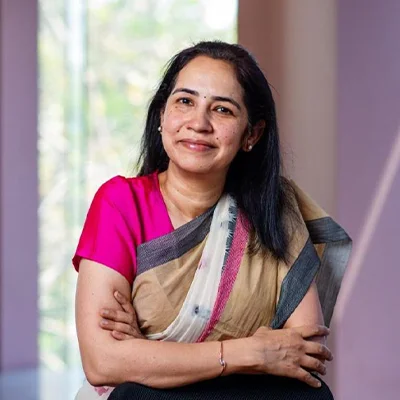
Vandita Batta
Vandita Batta, Chief of Operations at Saajha, works closely alongside Saransh, the Founder of Saajha, to lead organisational strategy, execution, and institutional effectiveness. Her leadership builds on her experiences as a former CFO to align programs with organisational strategy, build strategic partnerships, enable team performance, and ensure financial sustainability. Her role shows how operational leadership in the social sector is central to ensuring mission integrity and scale
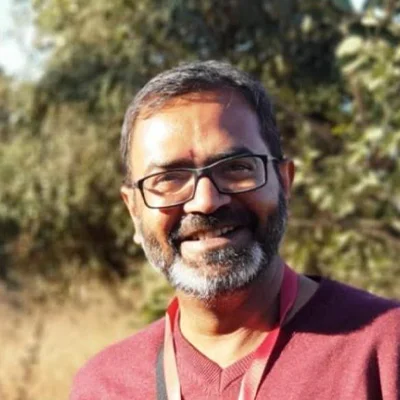
Proteek Kundu
Proteek Kundu founded NeevJivan Foundation, a social purpose organisation working in the area of skill development in rural Maharashtra, creating opportunities for sustainable livelihood in villages. Building and sustaining a social organisation from the ground up demands deep local engagement, along with government and knowledge partnerships. His leadership reflects how impact often grows through creating solutions rooted in proximity to communities.
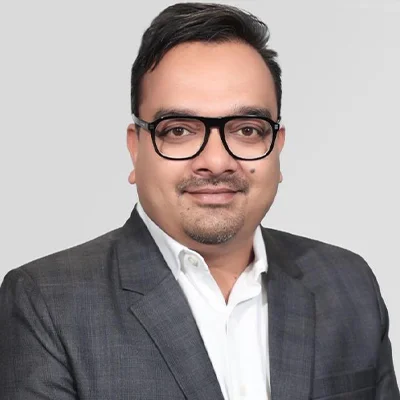
Piyush Singhania
Piyush Singhania, in his work with CSR for KPMG Global Services, bridges corporate capital and social impact by shaping CSR strategy, partnerships, and programme investments. His leadership lies in ensuring that corporate resources are deployed thoughtfully, aligned to genuine community needs, and measured for sustainable outcomes.
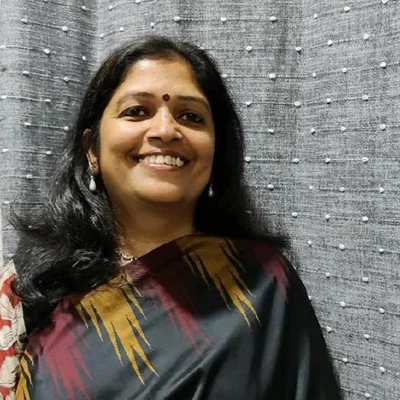
Urmila Sampath
Kavita Gunderia
Practising Leadership within ILSS
Leadership practice is also embodied beautifully by the various alumni who work at ILSS.
Lt. Gen. Ravin Khosla Retd
Lt. Gen. Ravin Khosla Retd. (Alum, Cohort 19) anchors admissions for The ILSS Leadership Program. After decades in the armed forces, where leadership is shaped by command and responsibility, his leadership today lies in discernment and spotting talent for the sector. He listens for humility, intent, and readiness to serve. Admissions, as a function, becomes stewardship, shaping not just who joins a cohort but also the quality of dialogue within it.
Meghna Jaishankar
Meghna Jaishankar (Alum, Cohort 20) brings nearly two decades of leadership hiring experience at McKinsey & Company and Spencer Stuart. Today, she is building the Alumni Movement at India Leaders for Social Sector, where she brings her rich experiences and capabilities in partnerships and stakeholder management to strengthen alumni engagement and sector collaboration. Her work reflects a crucial insight: Leadership development does not end at transition. It requires sustained networks, peer learning, and community.
Anirban Chaudhury
Anirban Chaudhury (Alum, Cohort 17), who leads the Koita Centre of Excellence for Digital Transformation at India Leaders for Social Sector, brings over two decades of leadership experience in technology and consulting. As an alum, his shift into development required translating advanced technology frameworks into mission-sensitive solutions. His leadership practice lies in ensuring that digital transformation strengthens impact organisations responsibly and equitably
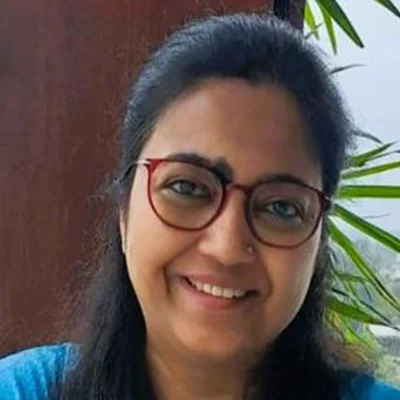
Samina Alam
Samina Alam (Alum, Cohort 18), who leads the ILSS Centre for Board and Governance, brings over two decades of experience in education and skills, including leading large-scale, multi-stakeholder engagements and systemic interventions across states. Her leadership lies in helping organisations and boards move beyond compliance to stewardship by ensuring that governance becomes a continuous practice that supports institutional credibility and long-term sustainability.
What the Future Demands
Watching Cohort 8 mature over five years has reminded me that leadership development cannot be measured at the moment of transition. It must be observed over time.
The defining moments are rarely dramatic. They occur when a leader chooses to begin in the field and listen deeply to the stakeholders as much as analysing existing data. They come alive when someone strengthens a legacy institution with respect for the journey that brought us here. They occur when data, looked at in a different way, prompts a strategic pivot. When power is shared with various key stakeholders rather than with a consolidated few with titles of power.
I have seen alumni step into senior roles and remain grounded. I have seen leaders in small organisations demonstrate extraordinary systems awareness. I have seen colleagues within ILSS evolve from participants to institutional stewards.
These experiences reinforce my belief that while positions may change and titles may evolve, what endures is the discipline in practice of leadership.
The coming decade will test India’s social sector deeply. Climate volatility, technological disruption, demographic shifts, geopolitical complexities, and funding realignments.
We will need leaders across the Sustainable Development Goals. Across large and small organisations. Across implementation and advocacy spaces. Across philanthropy, technology, and public systems.
After all, leadership in the social sector is not something one arrives at. It is something one commits to daily through reflection, systems awareness, collaboration, and accountability to communities.
While a position may grant authority, it is the practice that determines impact. And in our sector, sustained impact is the only leadership that truly matters.
About the Author
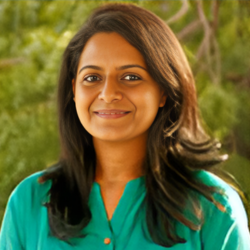
Archana’s work experiences have focused on leading projects and teams in Learning and Leadership across the Corporate, Government and Social sectors. Prior to ILSS, she worked as the City Director at Teach for India (TFI) where she led the strategy and operations for the TFI Fellowship and Alumni Movement to create a movement for educational equity. Prior to Teach for India, Archana worked with Infosys Leadership Institute and Boston Public Schools in the areas of Human Capital, Competency Development, Change Management and Diversity and Inclusion.
Archana is an Alumna of the Master’s Program in Education (M.Ed.) at Harvard Graduate School of Education at Massachusetts, Master’s Program in Management (MBA) at T.A. Pai Management Institute, Manipal and the Bachelor’s Program in Commerce (B.COM) at Stella Maris College, Chennai. Across all roles and teams, being a learner and an educator is the core of her work.”