

- ABOUT US
- PROGRAMS
- THE ILSS LEADERSHIP PROGRAM
- THE ILSS FUNDRAISING PROGRAM
- THE ILSS PEOPLE PRACTICES PROGRAM
- THE ILSS EMERGING WOMEN’S LEADERSHIP PROGRAM
- THE ILSS BOARD GOVERNANCE PROGRAM
- THE ILSS BOARD LEADERSHIP PROGRAM
- THE ILSS AI & DIGITAL TRANSFORMATION FOR SOCIAL IMPACT PROGRAM
- THE ILSS ADVANCED NONPROFIT LEADERSHIP AND MANAGEMENT (ANLM) PROGRAM
- CENTRES
- EVENTS
- LEADERSHIP INSPIRED
- ALUMNI
- ILSS IN THE NEWS
- RESOURCES
- CONTACT
- APPLY NOW
- THE ILSS LEADERSHIP PROGRAM
- THE ILSS FUNDRAISING PROGRAM
- THE ILSS PEOPLE PRACTICES PROGRAM
- The ILSS Board Governance Program
- THE ILSS EMERGING WOMEN’S LEADERSHIP PROGRAM
- THE ILSS AI & DIGITAL TRANSFORMATION FOR SOCIAL IMPACT PROGRAM
- THE ILSS YOUNG LEADERS PROGRAM
- THE ILSS ADVANCED NONPROFIT LEADERSHIP AND MANAGEMENT (ANLM) PROGRAM
Case Study
Adhyayan Quality Education Foundation (AQEF): Board Case Study
Introduction
Adhyayan took shape around a question that its co-founder, Kavita Anand, began asking during her years leading Shishuvan, a K to 12 school in Mumbai, namely how a school could know whether it was truly good. Having observed significant disparities in quality across Indian classrooms, where some children thrived while others disengaged entirely, she concluded that genuine school quality rests on a child’s relationship with learning. AQEF was founded in 2015 to help schools answer that question honestly, through data and continuous self-improvement.
The organisation has since scaled from a single state presence in Goa to direct partnerships with state governments across the Northeast and in Karnataka, moved from informal operations to structured functions such as a dedicated People Practices vertical, and shifted governance from a founder-centric model to a broader leadership team of senior educators and specialists.
Adhyayan built its advisory board early, while still a small organisation, specifically to secure strategic direction and network support ahead of need. Its own experience suggests that the right time to build a board is at the early growth stage rather than in response to a crisis, since an established board brings a trusted group of advocates who already understand the organisation’s mission and can act quickly when stability is threatened.
Central Challenge
A Fundraising Crisis That Threatened Survival
In early 2020, the onset of COVID-19 triggered an existential crisis for Adhyayan. Its anchor donor withdrew almost overnight, eliminating the financial backbone of operations, while grants across the sector were redirected toward emergency relief and local school closures halted on the ground delivery. The core team contracted from seventeen members to four. Leadership stopped or reduced its own salaries to keep basic operations afloat, and some team members remained on a conditional, volunteer basis.
Fundraising presented the sharpest challenge. Conventional methods had stopped yielding results and required an entirely new approach. Funding remained concentrated in a single state, which meant AQEF needed to demonstrate demand in new regions before it could unlock capital elsewhere. At the same time, the CEO was under severe strain, and the loss of key personnel had left the organisation without structured talent pipelines. Without a rapid infusion of bridge funding, the organisation was months away from winding down operations permanently.
Quick facts
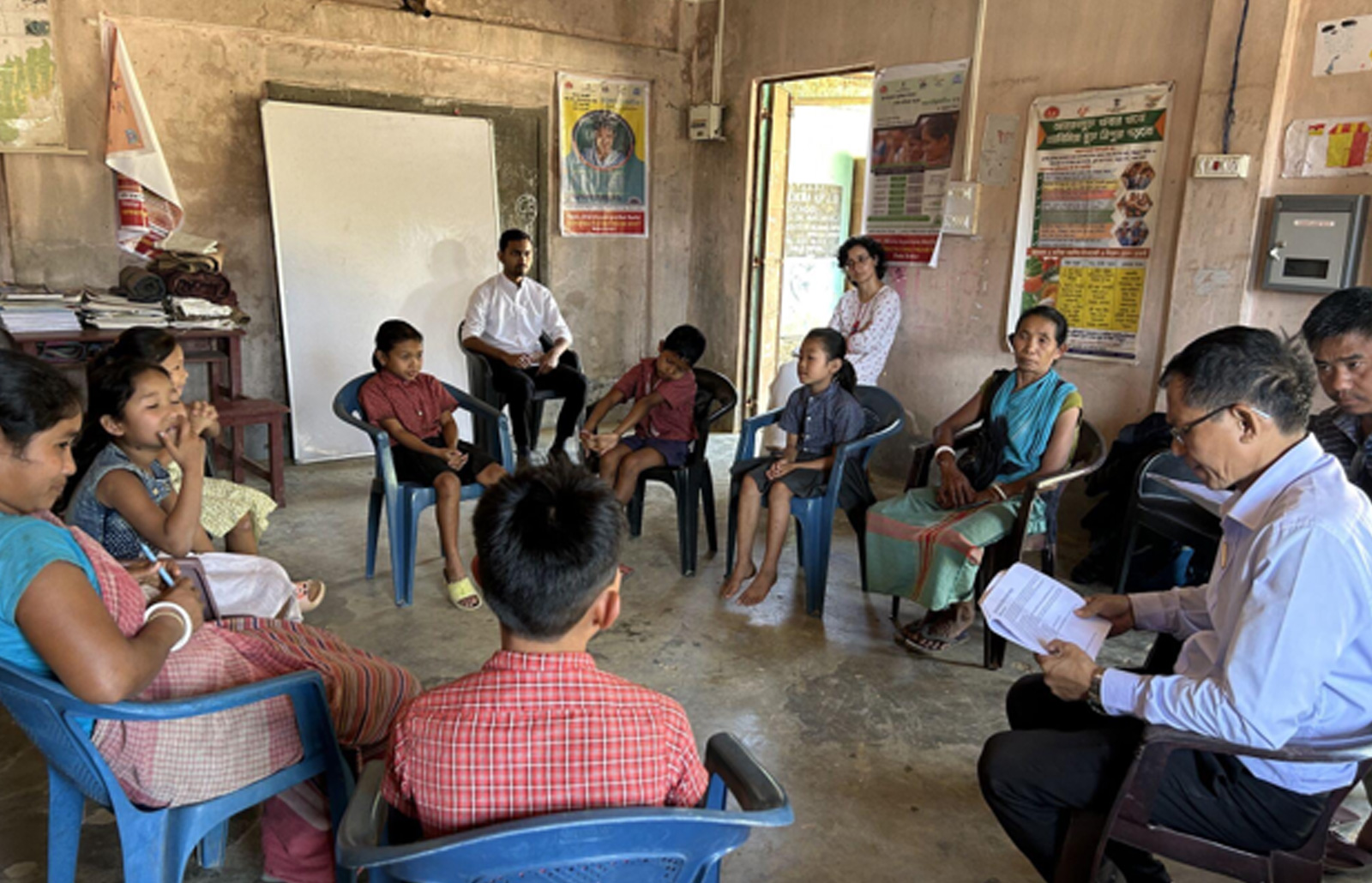
Solution
Rather than operating in isolation, Adhyayan brought its advisory board directly into crisis management, with particular emphasis on fundraising.
Fundraising Strategy and Network Access
Advisory board members used their personal networks and credibility to open funding channels that had previously been inaccessible to the organisation.
- One advisory board member vouched for AQEF’s work with prospective grantmakers, securing a lifeline grant that funded core operations and enabled the organisation to hire dedicated fundraising support.
- When AQEF considered expanding into Tripura, a region where funding was difficult to secure outside a handful of institutional donors, another advisory board member used board level connections to pitch the proposal directly to decision-makers.
- Similar introductions unlocked funding from an HNI donor who started supporting AQEF’s work in one state in 2021. This was at a time when funders generally preferred backing new initiatives over sustaining existing operations. Over time, each of these donors became long-term allies in AQEF’s growth.
- Another advisory board member helped AQEF in writing proposals, understanding the broader fundraising landscape better, all during the stagnant funding period. Results came in the form of conversions after 6 months of honing these skills.
- The CEO attended The ILSS Fundraising Program, funded directly by an advisory board member, to strengthen the organisation’s internal fundraising capability.
- When an initial search for a senior fundraising hire fell through, a board member advised against repeating a prolonged search for another high level candidate, suggesting instead that the allocated budget be split to hire two younger professionals, which immediately expanded lead generation capacity.
- The same board member advised leadership to establish clear financial and operational benchmarks, such as restoring market rate salaries and demonstrating demand in a second state, allowing the organisation to track objectively whether it was back on course.
Emotional and Operational Grounding
Beyond fundraising, the advisory board functioned as an emotional support system during an unusually difficult period. Formal quarterly board meetings gave way to real time, touchpoint driven communication, with board members checking in personally rather than waiting for scheduled updates.
During periods of CEO burnout and isolation, advisory members offered consistent encouragement, with one member sharing his own business survival story to normalise crisis as a natural phase of entrepreneurship. Recognising that leadership was operating at an unsustainable pace, board members advocated for structured breaks, shifting organisational culture toward wellbeing and long-term stamina. Maintaining full transparency about operational and financial strain allowed the board to function as a space where leadership could address challenges honestly, rather than project an appearance of stability.
As stability returned in 2021, the board moved into long-term strategic planning with the organisation, helping to map a three-year roadmap.
Consequences of Structural Changes
Board involvement moved Adhyayan from the brink of closure to a sustainable, multi-state operation.
- Within a year of scaling down to four core staff, the team grew to six salaried roles. By the following year (FY 2021-22), the headcount reached 25, and today the team stands at 54 full-time employees.
- Leadership expanded from a two-person team of founder and CEO to a seven-person team of senior educators and domain experts, distributing operational pressure and reducing organisational risk.
- Board connections and guidance helped secure operational presence and state-level buy-in across Tripura and Arunachal Pradesh; AQEF’s work now spans more than 7,500 government schools across 5 states and 1 union territory.
- A functional, multi-person fundraising vertical reduced AQEF’s dependency on any single funder or channel.
A stronger people practices vertical was established, led by an executive director from 2021, moving recruitment for critical roles from reactive to proactive.
The fundraising vertical built during the crisis has continued to mature. In September 2025, an advisory board member hosted and funded an exclusive fundraising luncheon for AQEF at a members’ club in Mumbai, drawing on his own networks to bring together eighteen curated CSR decision-makers and HNIs for a presentation followed by lunch and networking. The event secured two major donor conversions and four active pipeline leads, validating a repeatable, high-yield event model that AQEF now plans to scale annually with different board champions.
In the same year, an advisory board member who holds deep expertise in marketing and communications guided Adhyayan’s team as they revamped their communications strategy and channels through a series of bi-monthly online meetings and a dedicated in-person workshop in Delhi. She helped the team think through what and how to communicate the work AQEF does, identify stakeholder needs and develop campaigns with these in mind. As a result, the organisation updated their vision statement to align with the child-centric ethos integral to the Adhyayan. The support received from this exercise has greatly shaped the collateral and way the organisation speaks about its work to donors, partners and government stakeholders.
Conclusion
AQEF’s experience through crisis points to fundraising as the clearest lesson of its advisory board relationship. A board can be one of the most effective fundraising assets for the organisation when its members are willing to open doors, vouch for the organisation with funders, and host their own networks on its behalf, as the 2025 luncheon demonstrated. This only works where the organisation treats its board as a co-owner of problems rather than a periodic adviser, and where it maintains enough transparency about its financial and operational position for the board to intervene early.
Board composition matters as much as board process. The most effective members are genuine champions of the mission who offer honest critique and are willing to open doors and pitch donors themselves, rather than attend meetings at a distance. A board’s value is not purely financial or strategic either; it can also provide emotional grounding, helping leadership avoid burnout and isolation during periods of acute stress. Above all, Adhyayan’s experience underscores the importance of building this relationship early. Relying solely on founders for strategy, fundraising and execution leaves an organisation fragile, while diversifying funding pipelines, formalising operations and expanding leadership ahead of a crisis is what allowed AQEF to survive one, and what now allows it to fundraise on its own terms.
Advisory Board

Archana Pillai
Advisory Board Member
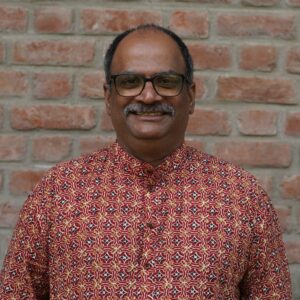
Bhawani Singh Shekhawat
Co-founder and Advisory Board Member
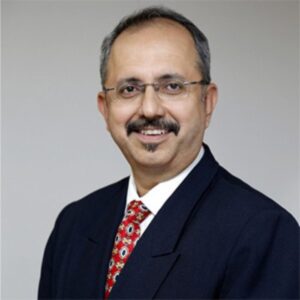
Ishmeet Singh
Advisory Board Member

Jagdish Acharya
Advisory Board Member

Monica Pachori
Advisory Board Member

Mukund Ranganathan
Advisory Board Member
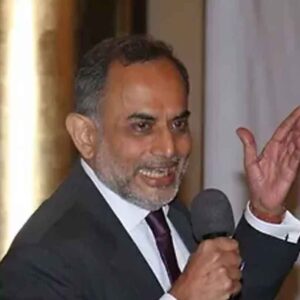
Nandan Maluste
Advisory Board Member
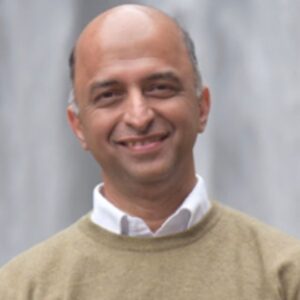
Samir Somaiya
Advisory Board Member

Shaveta Sharma-Kukreja
Advisory Board Member

Vandana Rao
Advisory Board Member

Call us :
+91 90733 87180Email us :
contact@indialeadersforsocialsector.comAddress :
51, Okhla Phase-3, New Delhi – 110020Resources
Get in touch
Subscribe to our newsletter to get our latest updates
