


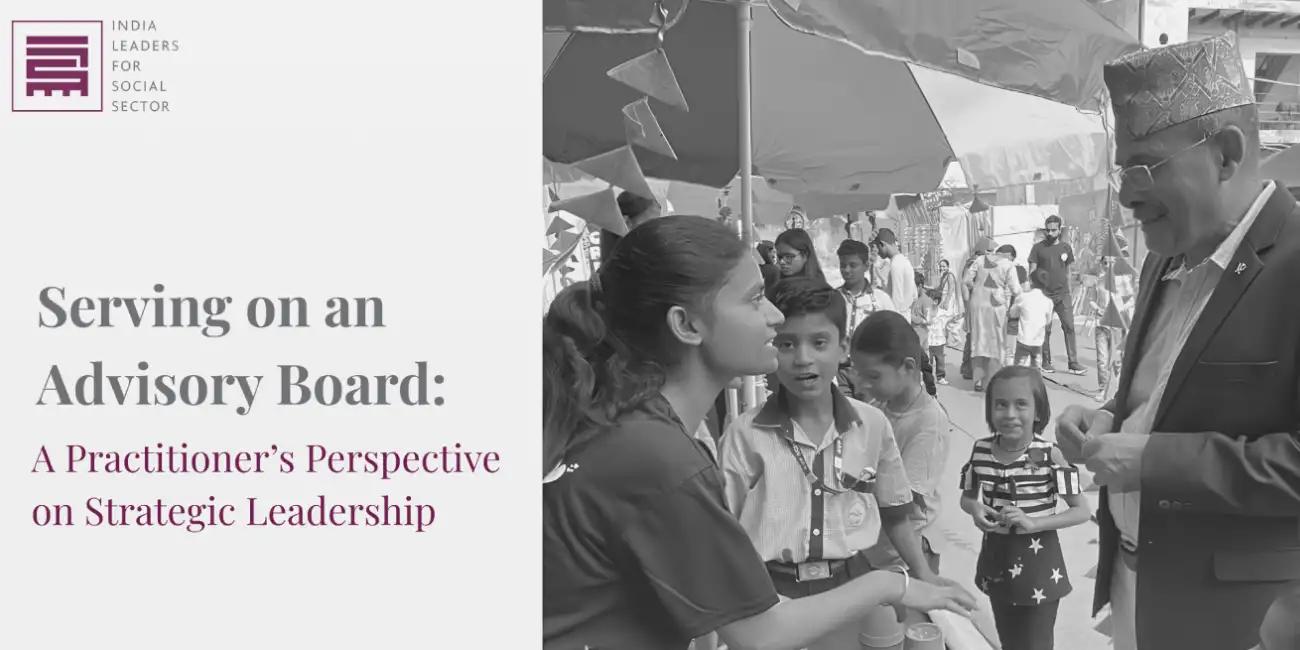
My first exposure to real social impact came from a small, innocuous school run by the Army in Faroona, a remote village near Kargil.
While I was visiting, I met the mother of one of the students and asked if she was happy with the school. She was almost amused at my question. The government school was miles away, and mothers were happy to drop their children off at the school while attending to daily chores. More importantly, she added that children who started at this school later performed exceptionally well when they joined the government school, with many local government officials having passed through its doors as young kids.
That experience was an eye-opener. It proved that well-meaning, small endeavours can meaningfully serve society. Inspired, I volunteered my time with a small school called Anant Valley Public School, run by a passionate young founder, Prerna Kaushik. Leveraging my vast experience, I mentored her on management, leadership, and time management. Informal calls led to deep conversations, while formal board meetings focused on growth prospects and teaching pedagogy. The journey, for me, has been immensely rewarding.
For busy professionals looking to channel their experience into social good, an advisory board role offers a powerful way to drive impact without the legal obligations of a governing board.
What Makes an Advisory Board Different?
Unlike statutory boards, advisory boards are not legally mandated for a social purpose organisation (SPO). However, an increasing number of SPOs constitute them to bring in subject-matter experts, guide strategy, and strengthen credibility with funders and donors. An advisory board role offers a powerful way to drive social change without the legal liability and obligations of a governing board.
Since advisory roles focus purely on strategic guidance, specialised mentorship, and networking, you can easily serve on an SPO advisory board while maintaining a demanding corporate or government job. Since they lack fiduciary duties, employers generally view them favourably. It allows you to act as a sounding board for the founder, validate new programs, and open doors to funders. It offers a deep connection to grassroots impact, expands your professional network, and sharpens your macro-level consulting skills.
Realistic Time Commitments
A major advantage of an advisory role is its flexibility. The time commitment can be tailored to suit both you and the organisation, typically breaking down as follows:
-
Formal Meetings:
Scheduled bi-annually or quarterly for overall reviews (conducted online or in person).
-
Ad-Hoc Consultations:
1 to 2 hours per month advising on specific projects or challenges.
-
Total Annual Commitment:
Approximately 24 to 40 hours per year for an active SPO board.
The Unique Value of Civil Servants and Public Sector Leaders
Civil servants and public sector employees bring immense institutional value to advisory boards. Their unique background helps SPOs navigate the complex intersection of public policy and community execution. They are in a position to provide deep insights into how state schemes are drafted and implemented at the ground level and how to approach government departments for joint public-private projects. They can also effectively advise on compliance frameworks and provide expert advice on maintaining clean administrative records aligned with state expectations.
Honorariums and Expectations in India
In India, advisory board service is fundamentally built on the ethos of voluntary, unpaid service. Most Indian SPOs expect advisory board members to serve without remuneration, though occasional nominal honorariums may be offered for specialised workshops. That said, larger SPOs routinely cover direct out-of-pocket expenses such as travel, lodging, and meeting meals.
How to Find the Right Advisory Seat
Finding the right position requires leveraging specialised nonprofit networks and proactive positioning:
-
1
Signal Availability: Highlight your specialised expertise and interest on LinkedIn.
-
2
Engage with Social Sector Aggregators: Connect with consultancies and aggregators like Dasra and Sattva.
-
3
Explore Targeted Programs: The shortest and most direct route is through curated initiatives like The ILSS Board Leadership Program run by India Leaders for Social Sector.
Final Thoughts
Joining an SPO advisory board is an exceptional way to channel your professional privilege into social good. For busy professionals, it provides the perfect balance of high-impact strategic contribution and low administrative burden. By matching your unique skills with the right cause, you can significantly accelerate a SPO’s mission.
About the Author

Ravin concluded a 37-year military career as the Deputy Chief of Army Staff, holding the rank of a Three-Star General. Through a long and checkered career, he has served along both the Pakistan and China borders. He has actively participated in counter terrorist operations and commanded prestigious field formations, including the renowned Gajraj Corps. At the apex level, he contributed to HR policy formulation and its implementation. Additionally, Ravin served as instructional staff at the Defence Services Staff College in Wellington and the National Defence College in New Delhi. He represented the United Nations in Congo and led the International Cooperation Branch of the Army.
Ravin holds an honours degree in economics from the University of Delhi, MPhil in Defence Studies from Madras University, Chennai and another MPhil from Devi Ahilya Bai University, Indore. His illustrious career earned him accolades, including the Param Vishisht Seva Medal, Uttam Yudh Seva Medal and Ati Vishisht Seva Medal.
Comments are closed