


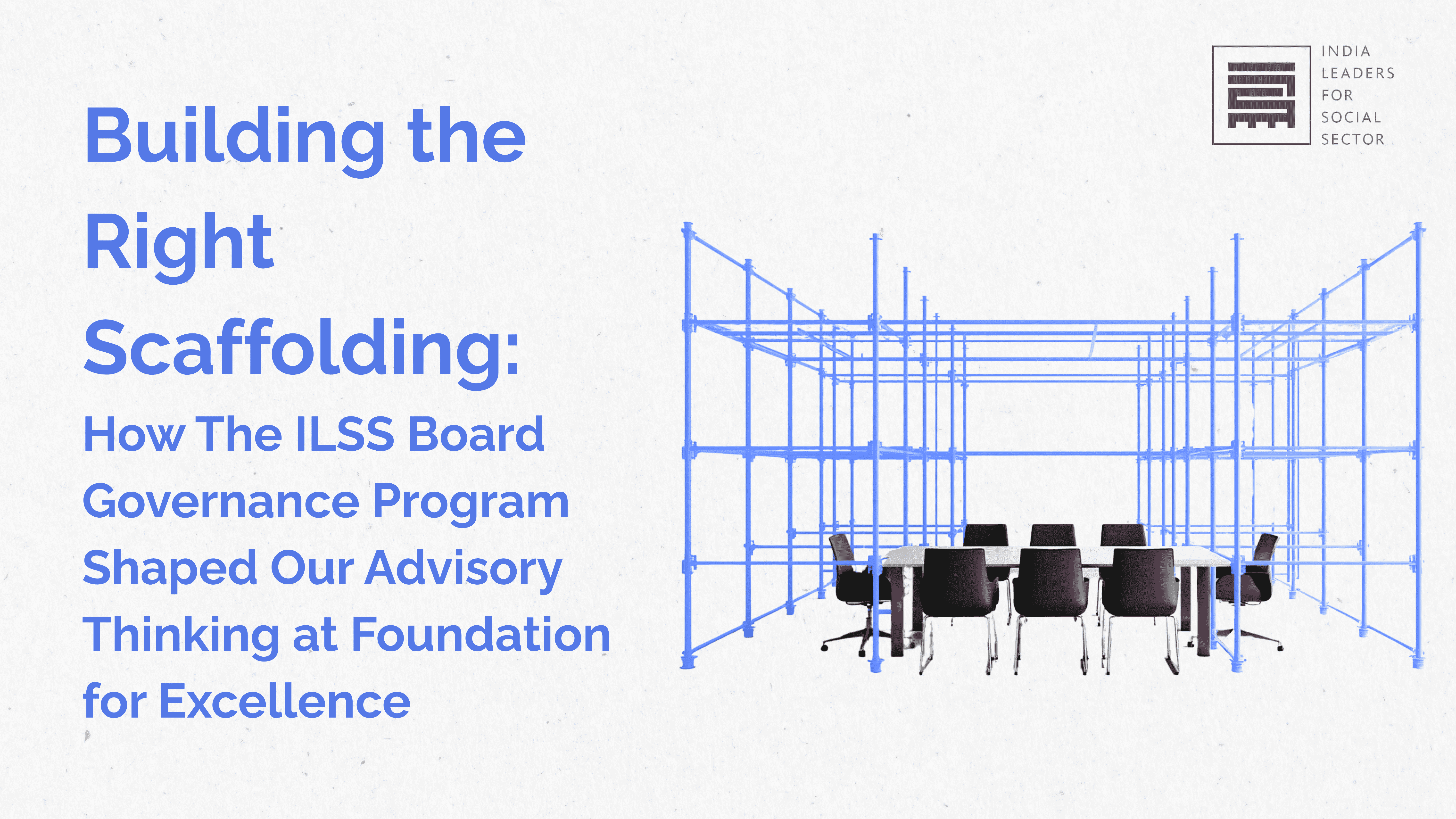
When you lead a social purpose organisation, you carry two burdens simultaneously: the urgency of the work in front of you, and the nagging sense that you are not building the institutional scaffolding needed to sustain and scale that work. For years, I knew Foundation for Excellence needed stronger advisory support in areas such as finance, technology, social media, and employment linkages, but I lacked the vocabulary, the framework, and honestly, the clarity to act on that instinct with intention.
The ILSS Board Governance Program changed that, not by pushing me toward a formal advisory board structure, but by helping me find a more organic, purposeful path that suited where Foundation for Excellence actually is today.
A Program Designed for Leaders Like Us
The ILSS Board Governance Program is built specifically for leaders of social purpose organisations. It is not a generic governance course; it is a focused, seven-week journey that equips nonprofit founders and CEOs with the skills and tools to establish or strengthen effective boards and advisory structures. What struck me immediately was how it addressed a tension I had long felt but never named. The program clarified the distinction between a governing board, which carries statutory and fiduciary responsibility, and advisory support, which provides strategic expertise and functional depth. It helped me see that I had been trying to collapse both functions into one, and in doing so, had been using neither effectively.
Structuring My Thinking — Without Over-Formalising It
One of the most valuable outcomes of the program was the rigour it brought to how I thought about advisory engagement and equally, the permission it gave me not to over-engineer it. Good advisory support is not about creating elaborate structures with charters and titles. It is about identifying the precise gaps in your organisation’s capability, finding the right people who genuinely care about your mission, and creating the conditions for them to contribute meaningfully.
I came away with a clear conviction: Foundation for Excellence was not ready for, and did not need, a formal advisory board. What we needed was something more flexible and immediate, an advisory group of passionate individuals, each contributing expertise in a specific domain, working closely with us as trusted partners. The program helped me ask better questions to arrive at that clarity: What does Foundation for Excellence actually need right now? Where is our growth constrained by gaps in knowledge or networks? How do we find people who are not just credentialed but genuinely invested? Having a structured framework to work through these rather than relying on intuition alone made the path forward visible.
From Classroom to Action: An Advisory Group Takes Shape
What made the program particularly powerful was that it did not allow the learning to remain theoretical. I began acting even while still in it.
I reached out across my network, not to fill formal advisory seats, but to invite passionate, knowledgeable individuals into a fluid, collaborative relationship. In a remarkably short time, we brought together a dedicated advisory group spanning four areas: finance, information technology, social media, and employment linkages. This is not a formally constituted body with written mandates and scheduled quarterly meetings. It is something arguably more powerful: a group of deeply committed people who are engaged, accessible, and genuinely invested in our work.
The finance advisor has brought rigour to how we think about resource planning and sustainability. Our IT advisor is helping us leverage technology as an enabler of mission rather than an afterthought. The social media advisor has helped us think about narrative and community building beyond tactical posting. And the employment linkages advisor is opening networks that directly strengthen one of our core programmatic goals.
Advisors as Partners, Not Passengers
Perhaps the most important thing I have observed is the quality of engagement. These are not passive relationships. Our advisors are working closely with the core leadership team in a seamless, collaborative fashion, and the difference in our organisational thinking and capability is already evident.
This did not happen by accident. The program gave me a clear-eyed understanding of what makes advisory engagement work:
clarity of purpose, genuine respect for the advisor’s expertise, and a leadership culture open to external challenge. When you create those conditions, passionate people step up and lean in. The result is an advisory group that functions less like a structure and more as an extension of our team.
What I Would Say to Fellow SPO Leaders
Governance is often treated as a compliance obligation, something you do because you must, not because it creates value. The ILSS Board Governance Program dismantles that assumption. Strong advisory support is one of the most high-leverage investments a nonprofit leader can make, it multiplies your organisation’s capability without multiplying your headcount, and brings in perspectives and networks that would otherwise be out of reach.
If you have been putting off building advisory support because it feels like a big, formal undertaking, I want to offer a different frame. You do not have to create a board. You do not need charters and committees to begin. Start with clarity about what you need, find people who genuinely care, and invite them in. The ILSS Board Governance Program will give you the framework to do exactly that, at whatever level of formality suits your organisation’s stage.
For me, the program was the catalyst that moved an intention I had carried for years into concrete action. Foundation for Excellence is stronger for it, and our work in the communities we serve will be too.
Ram Kolavennu is the CEO of Foundation for Excellence, an organisation committed to enabling youth from underserved communities to access quality education and meaningful livelihoods.
About the Author
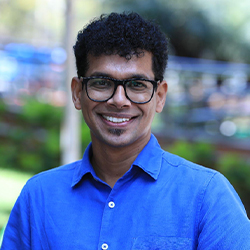
Ram Kolavennu is the CEO at the Foundation for Excellence, driving scalable solutions for societal impact. With 27 years of experience, he has led mission-critical programs across startups and global enterprises, excelling in operational excellence, sustainability, and innovation. His expertise includes program execution and business analysis, enabling transformative growth.
Ram holds a postgraduate degree in business administration and is a certified life and career coach, passionate about empowering individuals. He is dedicated to creating meaningful change through strategic leadership.
Comments are closed